Turning Shipping Containers Into Profitable Storage Units
Learn how shipping containers turned into storage units can earn rent. Compare sizes, plan permits and calculate costs before buying.
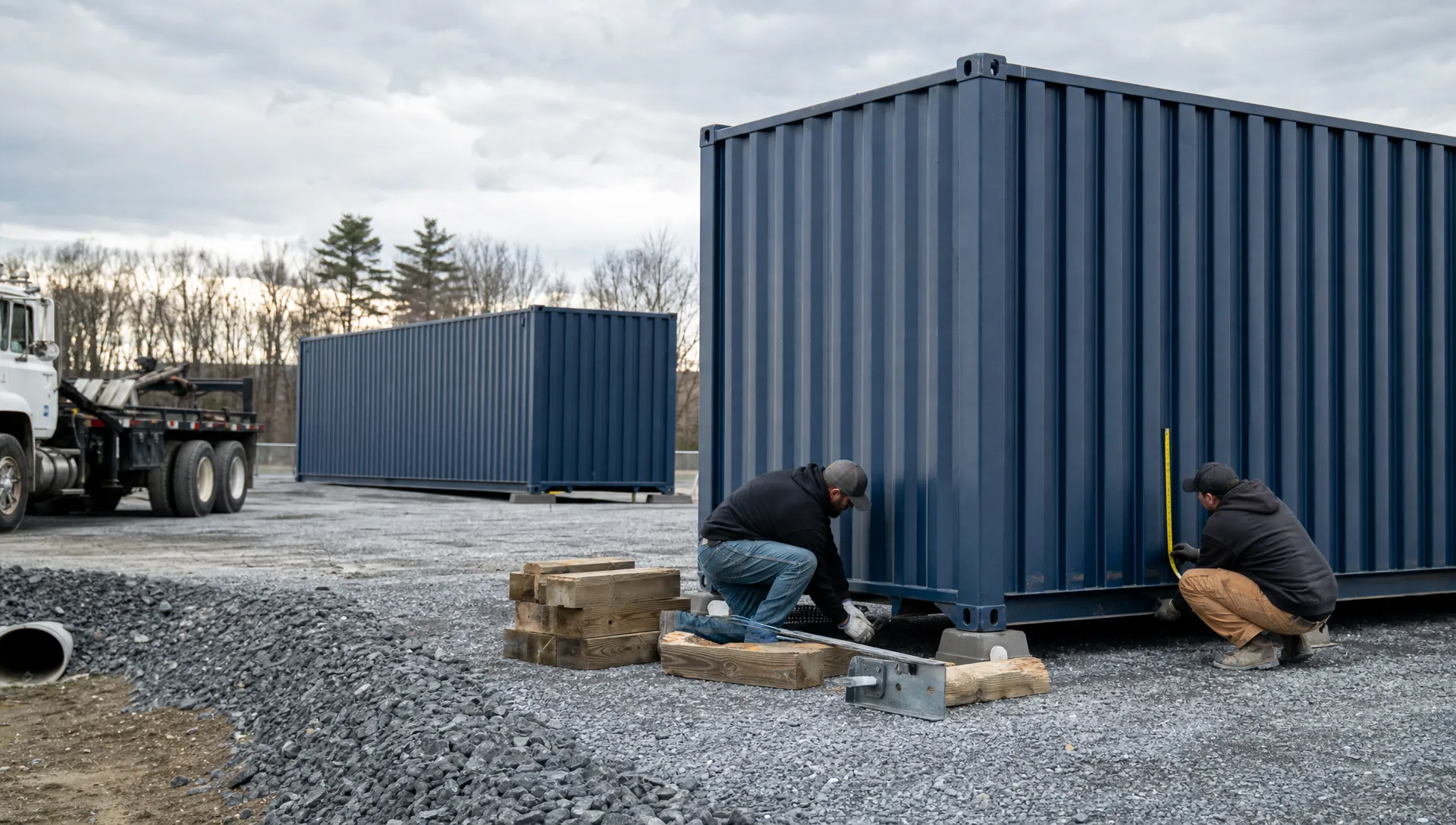
Shipping containers turned into storage units: a practical profit guide
Quick Answer: You can earn rental income from shipping containers turned into storage units when local demand, site approval and operating costs support the project. Start with a small number of inspected containers, provide secure customer access and calculate profit using realistic occupancy. Low purchase prices alone do not make a storage business profitable.
The business model is straightforward: buy containers, prepare a permitted site and rent secure storage space. The hard part is choosing a location where customers will pay enough to cover the entire operation, including delivery, drainage, insurance and vacancies.
This guide focuses on running container-based storage at your property. Delivering rental containers to customers is a different model, with additional transportation costs and handling requirements.
Key Takeaways
- Confirm zoning, access and local demand before purchasing containers.
- Start with whole-container rentals unless smaller compartments justify the conversion expense.
- Budget for the finished storage site, not just the steel boxes.
- Test profitability at lower occupancy and include debt payments separately.
Validate demand and local approval first
Identify customers who need your location
A rural contractor storing tools has different needs from a homeowner storing furniture. Contractors may prioritize early access and vehicle clearance. Household customers may care more about convenience, cleanliness and protection from moisture.
Before investing in shipping containers turned into storage units, identify one primary customer group and the storage problem you can solve. Possible markets include farm supplies, business inventory, seasonal equipment and household overflow.
Check competing facilities within the area your customers would realistically drive. Record unit dimensions, advertised rents, access hours and whether prices reflect introductory discounts. Ask about availability rather than treating every advertised rate as proof of demand.
The SBA's market research and competitive analysis guidance provides a useful framework. Your goal is evidence of unmet demand, not simply a lower price than competitors.
Get a preliminary site decision
Ask your planning department whether paid container storage is allowed on the parcel. Personal storage, outdoor commercial storage and a self-storage business may receive different treatment.
Requirements vary by state, county and municipality. Ask about setbacks, screening, drainage, fire access, permitted operating hours and limits on container placement. Building officials may also require permits, foundation details or structural documentation.
A container's portability does not automatically exempt it from local rules. Get the approval path clear before paying for deliveries or signing a long-term land lease.
Choose container sizes and conditions around rentable space
Compare whole-container rentals with divided units
Whole-container rentals usually require fewer modifications. Divided containers can serve customers who need smaller spaces, but each compartment needs suitable access, separation and security.
For shipping containers turned into storage units, the best layout is the one customers will rent at a rate that covers its added cost. More doors do not automatically mean more profit.
| Container type | Typical exterior dimensions | Exterior footprint | Practical storage consideration |
|---|---|---|---|
| 20ft standard | 20ft long × 8ft wide × 8ft 6in high | 160 sq. ft. | Manageable whole-unit rental for tools, inventory or household goods |
| 40ft standard | 40ft long × 8ft wide × 8ft 6in high | 320 sq. ft. | More capacity, but greater delivery and site-access demands |
| 40ft high cube | 40ft long × 8ft wide × 9ft 6in high | 320 sq. ft. | Extra height for tall goods or appropriately designed shelving |
These figures describe typical exterior dimensions. Interior storage area is smaller, often roughly 148 square feet in a standard 20ft container and 302 square feet in a standard 40ft container. Confirm the actual unit's specifications before advertising dimensions.
Four compartments inside a 40ft container are not four full 10ft-by-8ft rooms. Walls, framing and the container's interior dimensions reduce usable space.
Inspect condition before planning modifications
One-trip containers have typically made one cargo journey. They are not necessarily free of dents or cosmetic wear. Used units can work well if their doors, roof, floor and seals remain sound.
Wind and watertight (WWT) describes weather resistance. Cargo-worthy (CWO) concerns suitability for cargo service, subject to the relevant inspection. Neither replaces approval for a commercial storage site, and a CSC plate is not a local building permit.
Check for roof corrosion, damaged seals, soft flooring and doors that require excessive force. Investigate persistent odors or unknown residues before renting space for household belongings.
Convert containers without creating expensive problems
Keep structural changes purposeful
A lockbox, repaired door seals and suitable ventilation can improve a basic storage unit without major reconstruction. Additional doors and partitions require more planning.
For shipping containers turned into storage units, every modification should address a clear customer need. Cutting several openings into a sidewall changes the structure and may require engineered reinforcement.
Cutting openings is a structural decision, not just a welding job. Have a qualified professional determine framing, reinforcement and anchoring requirements. Ask how the finished design affects weather resistance and any existing inspection documents.
For a closer look at upgrade priorities, review shipping container modifications that can justify their cost. Avoid office-style finishes unless your storage customers will pay for them.
Control moisture and secure the doors
WWT does not mean climate-controlled. A sealed container can still develop condensation when warm, humid air meets cooler steel surfaces. Furniture, paper records and fabrics are more sensitive than many outdoor tools.
Match moisture control to your climate and intended contents. Keep water away from the base, maintain seals and evaluate ventilation or a properly designed insulation system. Passive vents do not guarantee humidity control, and insulation alone does not create climate-controlled storage.
Use door hardware customers can operate safely. If adding roll-up doors, select hardware and weather seals suited to the opening and exposure. Partitions should prevent access between rented compartments without creating unventilated pockets.
If you install lighting, outlets or powered equipment, use a licensed electrician where required. Do not rely on extension cords as permanent wiring.
Plan shipping containers turned into storage units for safe access
Design the yard around customers and drainage
The cheapest parcel can become the most expensive site if it needs major grading or has poor access. Sketch container rows, customer parking, vehicle circulation and emergency access before ordering units.
A site for shipping containers turned into storage units needs more than enough room for the container footprints. Open cargo doors, turning vehicles, drainage features and required setbacks all consume space.
Keep containers level and supported according to the site design. Uneven support can make doors bind. Have a qualified professional determine the foundation and anchoring approach for local soil, wind and other site conditions.
Commercial facilities may also have accessibility obligations. Review the ADA requirements for businesses open to the public and ask your local officials or an accessibility professional how they apply to the layout, routes and storage spaces.
Confirm delivery details before committing
Delivery requirements depend on the truck, unloading method, container size and ground conditions. Obtain the hauler's clearance requirements rather than using a generic rule from another project.
Before scheduling delivery, confirm:
- The entrance width, turning route and overhead clearance match the delivery equipment.
- The truck can reach a firm unloading area without crossing unsupported ground or vulnerable utilities.
- The container doors will face the intended customer access area.
- The quote explains unloading, waiting charges and any equipment you must provide.
A container's tare weight and rated payload are useful specifications, but they do not determine whether your driveway or foundation can carry the load. Delivery equipment adds weight, and stored goods change the foundation's loading over time.
Build a budget that survives vacancies
Price the complete installation
Purchase price is only one part of the startup budget. For shipping containers turned into storage units, compare finished, ready-to-rent costs rather than container-only quotes.
Include containers, transportation, unloading, permits, professional design, site preparation and conversion work. Add fencing, gate access, signs, lighting and an allowance for unexpected work. Land purchase or lease costs belong in the analysis too.
Keep operating expenses separate from startup spending. Insurance, property taxes, security services, repairs, payment processing and management time continue after the units arrive. Include reserves for seal replacement, corrosion repair and door maintenance.
For the buying stage, compare new and used shipping container options, then request an itemized delivered quote for the condition and dimensions your plan requires.
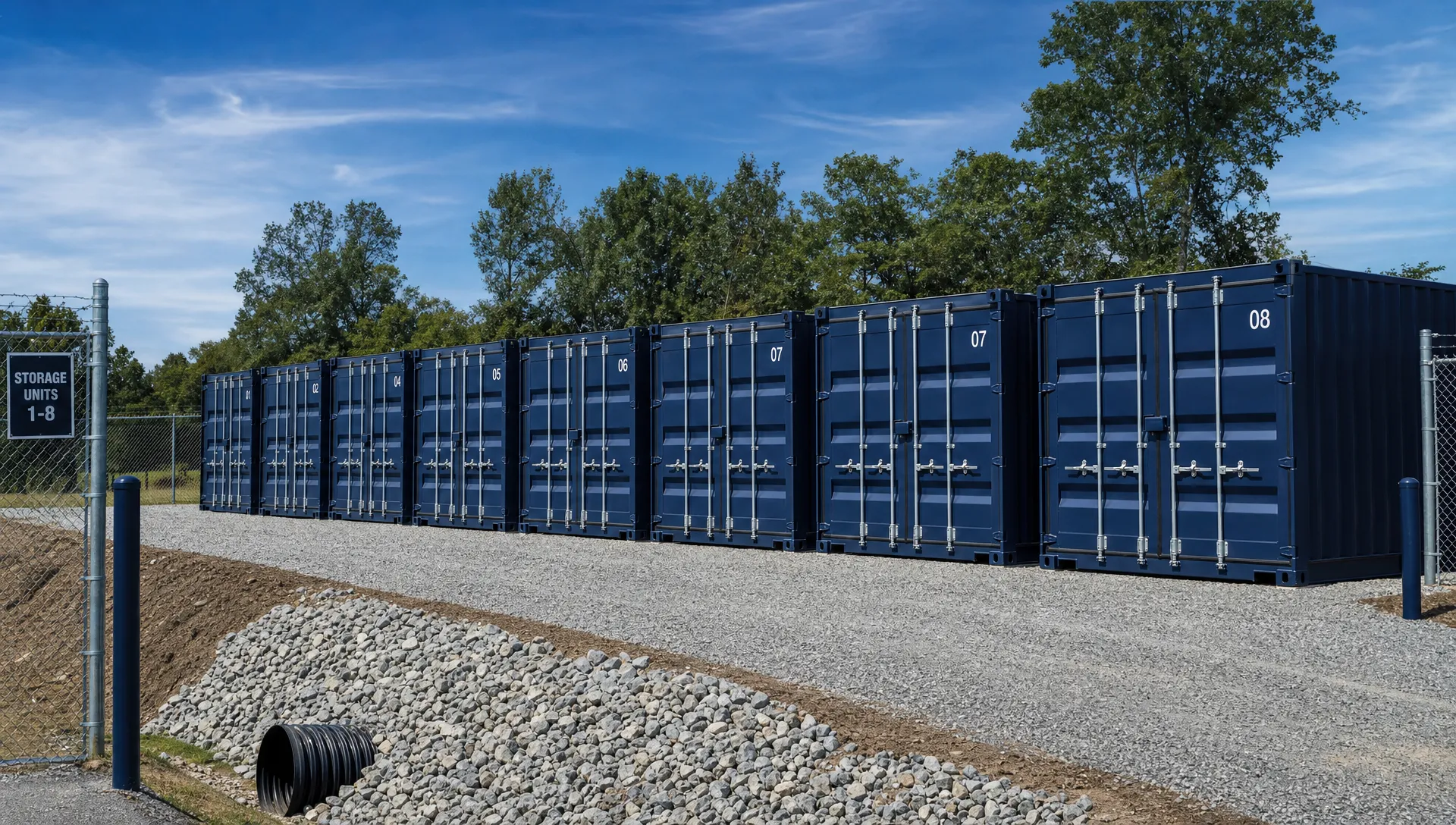
Use an explicitly hypothetical operating model
The following figures are planning assumptions, not Outback Shipping Containers prices, local market rents or a forecast. Replace every input with written quotes and evidence from your market.
Assume eight separately rented containers, a $60,000 installed investment excluding land acquisition and monthly rent of $175 per occupied container. That produces $1,400 in potential monthly rent at full occupancy.
Assume $450 per month in operating expenses and maintenance reserves, excluding loan payments, income taxes and depreciation. The example also assumes the same rent for every unit and no unpaid rent or discounts.
| Average occupancy | Monthly rental revenue | Monthly cash before debt payments | Monthly cash after an assumed $650 loan payment |
|---|---|---|---|
| 60% | $840 | $390 | -$260 |
| 75% | $1,050 | $600 | -$50 |
| 85% | $1,190 | $740 | $90 |
| 100% | $1,400 | $950 | $300 |
Occupancy percentages represent averages over time. An eight-unit operation cannot have 6.8 occupied units on a particular day, but it can average 85% occupancy across several months.
At 85% occupancy, cash before debt payments would be $8,880 annually. Dividing the assumed $60,000 investment by that amount gives a simple payback of about 6.8 years. This excludes land acquisition, ramp-up time, taxes and changes in expenses.
Find the break-even occupancy
The break-even test for shipping containers turned into storage units is more useful than an optimistic full-occupancy projection. Divide monthly costs by potential monthly rent to find the occupancy needed to cover those costs.
In this simplified example, $450 divided by $1,400 equals about 32% before financing. Including the assumed $650 loan payment raises the threshold to about 79%. You would need seven of the eight units occupied at full rent to cover that month's assumed costs.
Actual break-even changes when expenses vary with occupancy, tenants receive discounts or payments go uncollected. Include those factors in your spreadsheet rather than treating occupied space as collected revenue.
For a broader investment framework, use the guide to evaluating container rental ROI. Keep investment return, cash flow and loan affordability as separate calculations.
Launch in phases and manage the storage business
Open a small, complete first phase
Starting with fewer units can limit exposure, provided your permits and site plan allow expansion. Finish drainage, access and security for the first phase instead of placing containers on an unfinished lot.
Advertise accurate dimensions, access hours and storage conditions. Be clear when units are non-climate-controlled. Customers should understand what protection you provide before signing a rental agreement.
An effective launch for shipping containers turned into storage units measures inquiries, conversions and collected rent. If many prospects need smaller spaces, that may support a later subdivision project. If prospects reject the location, adding containers will not fix the problem.
Track vacant days, reasons prospects decline and maintenance requests. Compare performance by unit size before expanding.
Establish rental rules and maintenance routines
Use a rental agreement reviewed for your state and business model. Address payment dates, permitted contents, access, insurance responsibilities, prohibited activities and procedures for overdue accounts.
Self-storage lien, notice and disposal rules vary by state. Do not assume you can remove or sell a tenant's property after a missed payment. Follow the applicable law with qualified legal guidance.
Set clear restrictions on hazardous materials, fuel, food, living in units and unauthorized electrical work. Your insurer should understand that you are operating rental storage, not simply keeping containers on private land.
Inspect doors, seals, roofs, locks and drainage regularly, especially after severe weather. Record damage between tenants and keep repair histories. Reliable access and dry interiors are central to the service customers are buying.
Frequently asked questions
Are shipping container storage units profitable?
Shipping containers turned into storage units can be profitable when collected rent exceeds operating costs, financing payments and maintenance needs. Results depend on local demand, the site's approval and the installed cost. Test several occupancy levels and include a lease-up period before deciding whether the investment fits your budget.
Do I need a permit to use shipping containers as storage units?
You may need zoning approval, building permits, site-plan review or other permissions for commercial container storage. Requirements vary by state, county and municipality. Ask local planning, building and fire officials about your specific parcel and business model before purchasing containers or starting site preparation.
Can you divide a shipping container into multiple storage units?
Yes, a container can be divided into separately accessed compartments. Each needs suitable separation, a secure door and weather protection. New openings may require structural reinforcement and professional design. Compare the complete conversion cost with realistic rental income, and advertise the finished interior dimensions rather than dividing the exterior footprint.
Is a 20ft or 40ft container better for rental storage?
A 20ft container often suits customers who need moderate storage capacity, while a 40ft container provides more space for larger inventories. Neither is automatically more profitable. Compare delivered costs, site access, achievable rent and demand. A larger container may stay vacant if local customers mainly want smaller spaces.
Are shipping containers suitable for storing furniture?
They can be, but weather resistance alone does not control temperature or humidity. Inspect the unit, keep contents off the floor and assess condensation risks in your climate. Sensitive furniture, fabrics and records may need climate-controlled storage. Do not describe an ordinary ventilated container as climate-controlled.
Take the next step with a written container quote
A workable storage project starts with approved land, verified demand and a complete installed-cost budget. Choose container size and condition after those decisions, not before them.
If your plan for shipping containers turned into storage units is ready for pricing, explore Outback Shipping Containers' new and used containers. Request a written quote that identifies the container dimensions, condition, delivery arrangements and any proposed modifications so you can evaluate the purchase against your business plan.